How the DUOHEAT heat pump works
From an oil-free centrifugal compressor to a life-cycle assessment of the finished system — the engineering behind a heat pump built for industrial temperatures.
The heart of the system
At the heart of the DUOHEAT system is a high-speed, oil-free centrifugal compressor designed specifically for high-temperature heat pump applications. Its task is to raise the pressure of the working fluid efficiently, enabling the system to upgrade industrial waste heat to a temperature of up to 200 °C.
Unlike conventional compressors, the DUOHEAT machine is being developed for demanding operating conditions that combine high rotational speed, elevated temperature and a wide range of load changes. The compressor must therefore deliver not only high efficiency, but also stable and reliable operation under both nominal and off-design conditions.
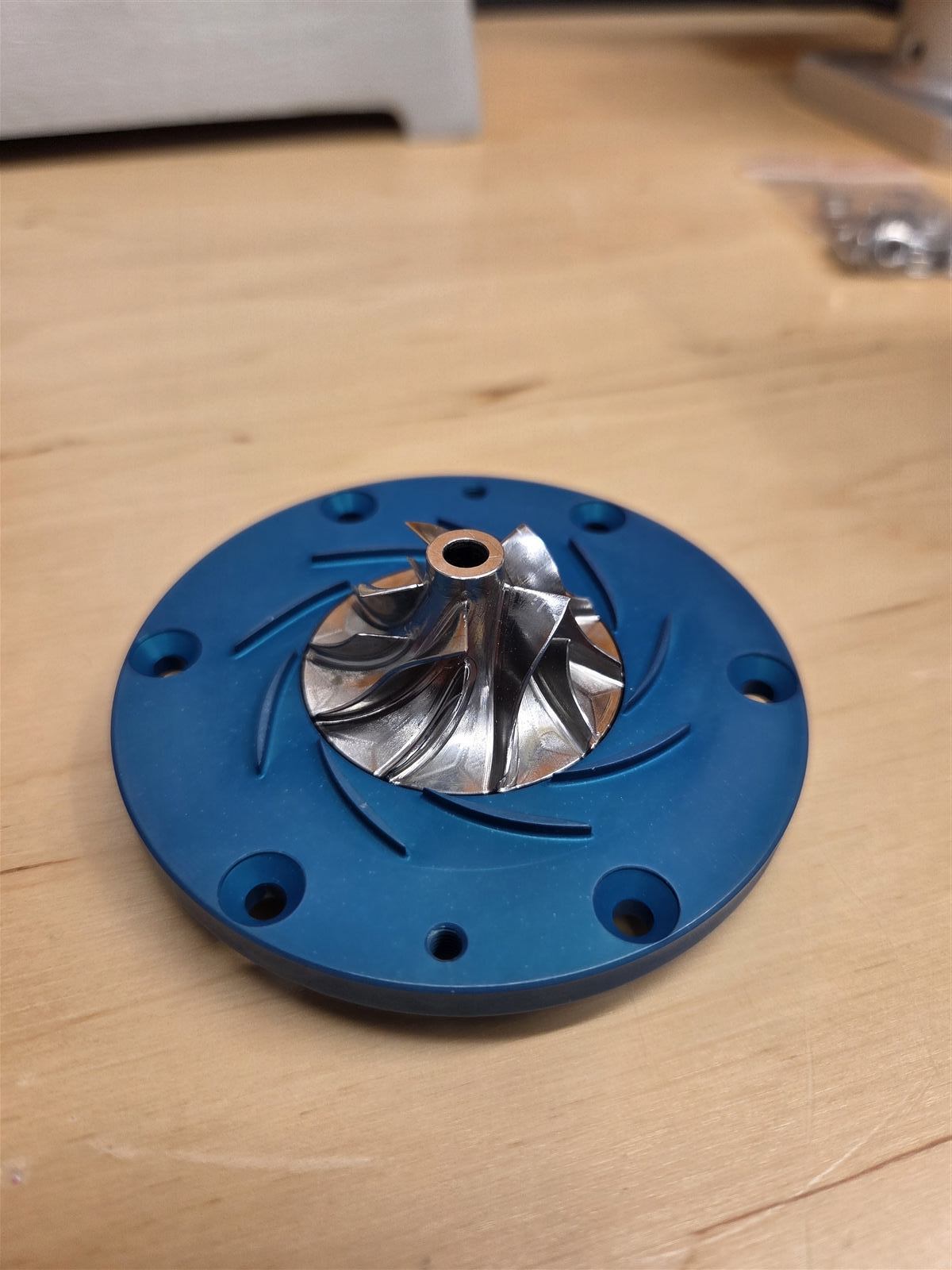
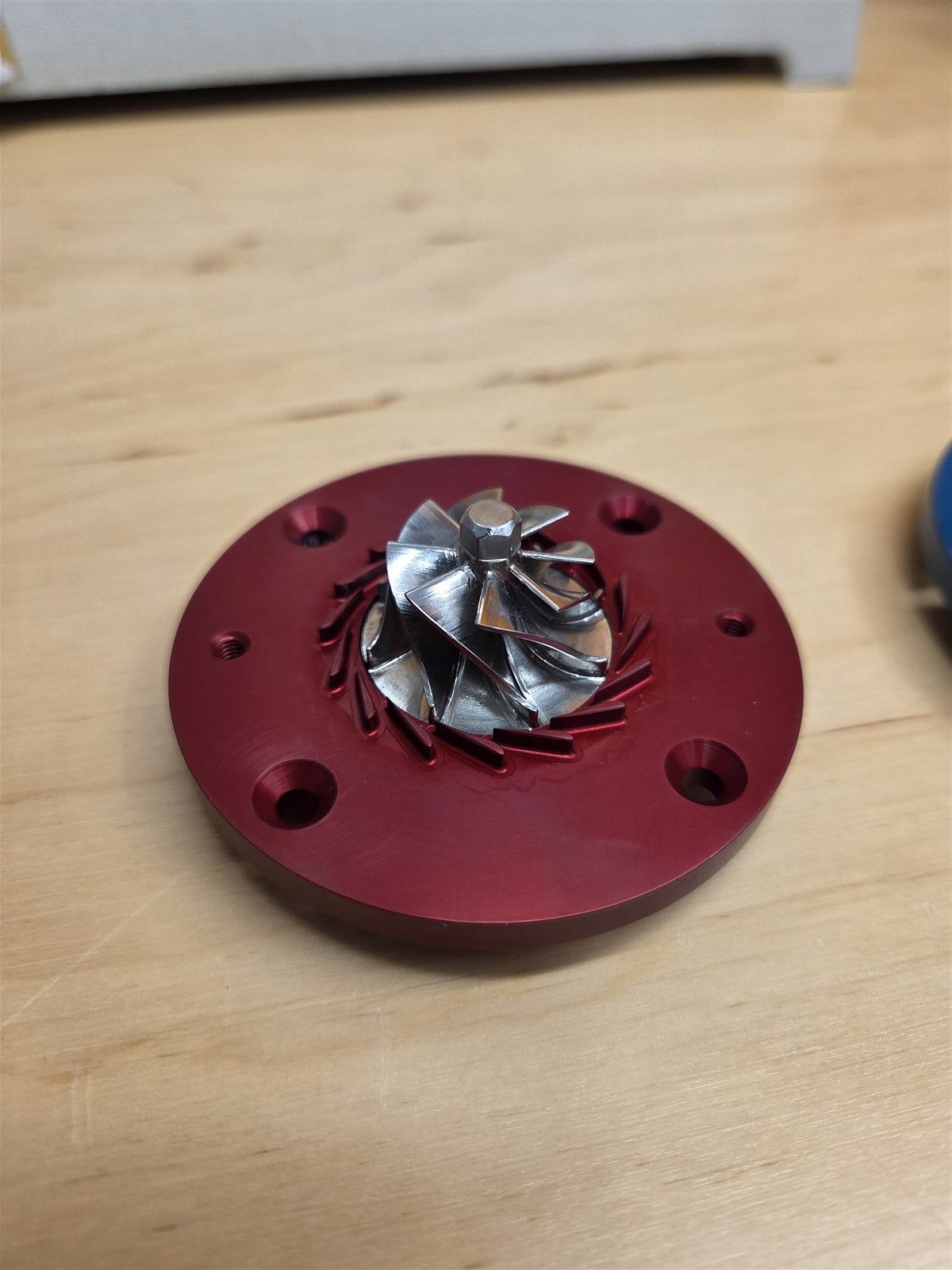
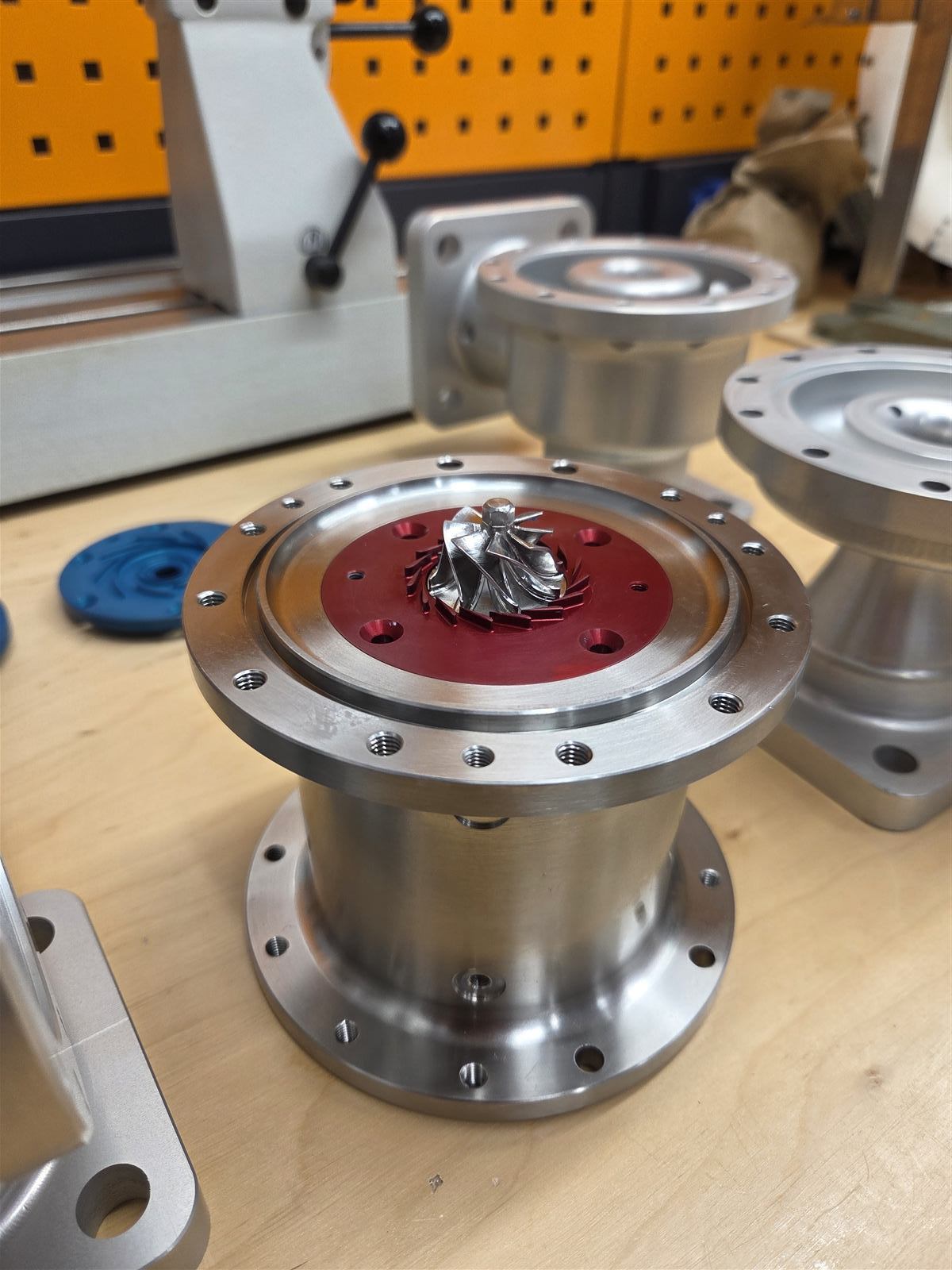
These photographs illustrate the type of machinery involved in turbomachinery research and are not photographs of the DUOHEAT compressor itself; real photos of the DUOHEAT hardware will replace them as the project produces its own components.
From numerical models to an optimised flow path
The design process begins with thermodynamic and zero-dimensional calculations, which are used to determine the main dimensions, blade angles and expected operating range of the compressor. Different sources of aerodynamic loss are included at this early stage to ensure that the initial design is physically realistic.
The flow path is then created using an in-house parametric model developed in Python. This allows the geometry of the impellers, diffusers and internal passages to be modified automatically and evaluated in a systematic way.
Advanced CFD simulations based on Reynolds-averaged Navier–Stokes equations are used to analyse the three-dimensional flow inside the machine. Combined with optimisation algorithms, these simulations help improve the blade shapes, reduce aerodynamic losses and maximise the isentropic efficiency of the compressor.
Mechanical integrity and rotor dynamics
The aerodynamic design is closely linked to mechanical and structural analysis. The impellers must withstand very high centrifugal forces as well as thermal loads associated with high-temperature operation.
For this reason, detailed strength calculations are carried out for the rotating components. The complete rotor system is also analysed from the perspective of rotor dynamics to verify its stability over a broad speed range and to avoid excessive vibration or resonance.
A particularly important part of the concept is the oil-free bearing system. The bearings are intended to operate without a conventional lubrication circuit, using the working fluid itself wherever possible. This reduces the risk of oil contamination, simplifies the system and improves compatibility with high-temperature heat pump operation.
Prototype and experimental validation
The next stage of the project will involve the construction of a prototype compressor and its integration with the main heat pump module. The machine will be tested gradually, starting from low-load operation and progressing towards the nominal operating point.
The experimental programme will include:
- verification of the oil-free bearing system,
- start-up and acceleration tests,
- measurements over a wide range of rotational speeds,
- nominal and off-design performance testing,
- validation of the high-speed electric drive,
- testing of the high-frequency power converter,
- and evaluation of the compressor within the complete heat pump system.
The measured data will be compared with numerical predictions. This will allow the computational models to be validated and the flow path to be improved in an iterative design process.
Intelligent monitoring and control
The compressor will also form part of an advanced diagnostic and control system. Machine-learning methods will be used together with deterministic and stochastic models to monitor the technical condition of the compressor and the whole installation.
The final system is intended not only to detect abnormal operation, but also to support predictive diagnostics, identify potential problems at an early stage and optimise performance in real time.
By combining aerodynamic design, structural analysis, rotor dynamics, experimental testing and intelligent control, the DUOHEAT compressor will become one of the key enabling technologies for efficient high-temperature industrial heat pumps.
Choosing a fluid that works — and doesn't harm the environment
Selecting the working fluid that circulates through the pump and carries its energy is a central part of the research. The project's aim is a fluid that is natural and organic, rather than one that could negatively affect the environment. Choosing the right fluid means balancing its thermodynamic properties against safety and environmental impact.